(Picture: Javier Torres)
Analysis: why José Antonio Kast breaks the old of Bolsonaro and Milei in Chile
While Kast’s rise marks the return of the right to power with agendas of security and order, his institutional trajectory and pragmatism distance him from the “outsider” and explosive style of neighboring leaders.
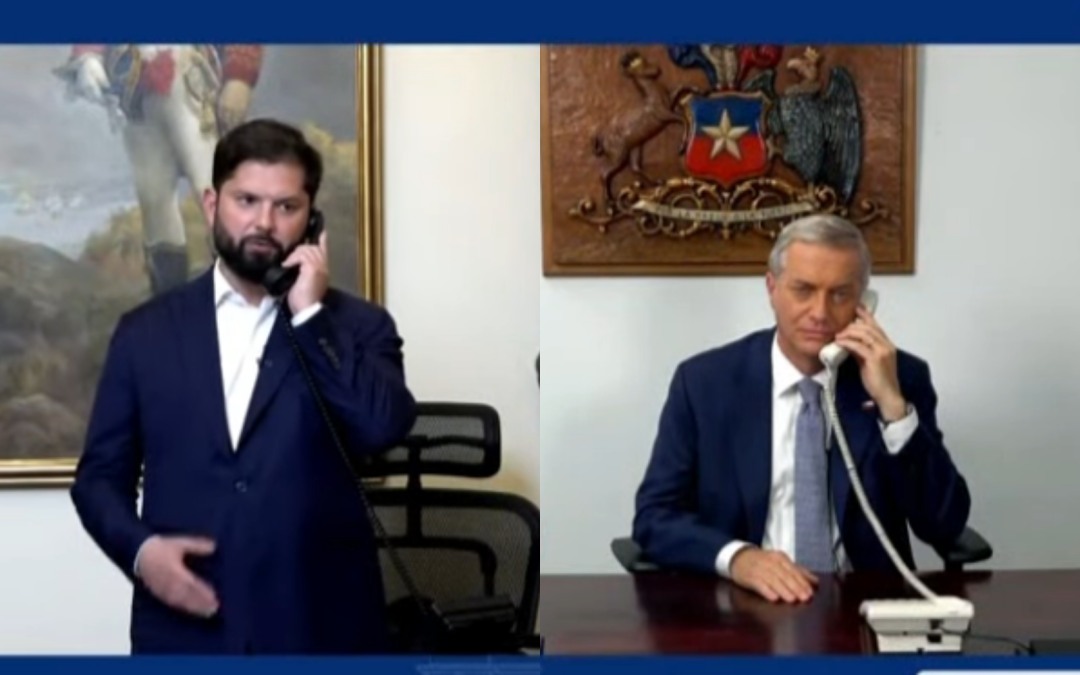
The election of José Antonio Kast to the presidency of Chile consolidated the return of the right to power in the country, driven by forceful rhetoric against crime and illegal immigration. However, reducing Kast to a mere reflection of figures like Jair Bolsonaro in Brazil or Javier Milei in Argentina is a simplification that ignores crucial nuances. Political analysts warn that, despite coincidences in the conservative agenda, the “Kast formula” operates on a distinct frequency.
Distinct trajectories: the career politician vs. the outsider
The first major divergence lies in political origins. While Bolsonaro capitalized on military support and a long career in the backbenches before his meteoric rise, and Milei emerged as a liberal libertarian outsider challenging the political caste, Kast is a product of the traditional system. He has a consolidated career within established right-wing parties in Chile, with a history of action focused on public security and order, operating within the rules of the institutional game for decades.
Style and governance: institutionality over confrontation
Although the three leaders share views on tougher penal codes and criticisms of cultural progressivism, Kast’s modus operandi differs substantially. Bolsonaro and Milei built their bases through polarizing, direct, and often confrontational communication, especially on social media.
Kast, on the other hand, adopts a stance that analysts classify as more pragmatic. His experience in parliamentary debates has shaped a profile that, while firm in its convictions, tends to seek institutional stability. The expectation is for an administration that prioritizes the functioning of the public machinery over permanent cultural warfare, seeking a balance between moral conservatism and governability.
The Chile factor: a unique social scenario
The context in which Kast assumes the presidency also imposes limits and directions different from those observed in Brazil or Argentina. Chile still echoes the demands of recent social protests and seeks answers to deep structural inequalities.
Unlike Brazil, which experienced extreme polarization, or Argentina, which seeks economic shock reforms with Milei, Chile demands from Kast a capacity for social pacification. To succeed, his governance will need to focus on solving concrete problems and delivering tangible results, distancing itself from purely ideological rhetoric. Kast’s legacy will depend on his ability to navigate these complexities, proving that his brand of right-wing politics is shaped by Chilean particularities, not merely a copy of regional models.
Resumo em Português:
Esta análise examina a figura de José Antonio Kast no cenário político chileno, contrastando-o com Jair Bolsonaro e Javier Milei. Embora compartilhe pautas conservadoras, como o combate ao crime e à imigração ilegal, Kast se diferencia por sua trajetória política tradicional e institucional. O artigo argumenta que, diante do contexto social chileno pós-protestos, Kast tende a adotar uma governança mais pragmática e menos confrontadora do que seus pares sul-americanos, focando na estabilidade em vez da polarização extrema.
Resumen en Español:
Este análisis examina la figura de José Antonio Kast en el escenario político chileno, contrastándolo con Jair Bolsonaro y Javier Milei. Aunque comparte agendas conservadoras, como el combate al crimen y a la inmigración ilegal, Kast se diferencia por su trayectoria política tradicional e institucional. El artículo argumenta que, ante el contexto social chileno post-protestas, Kast tiende a adoptar una gobernanza más pragmática y menos confrontacional que sus pares sudamericanos, enfocándose en la estabilidad en lugar de la polarización extrema.